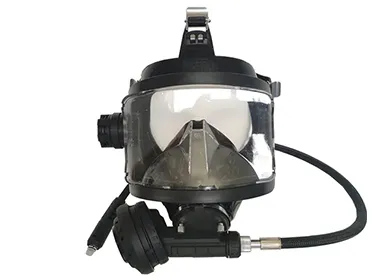
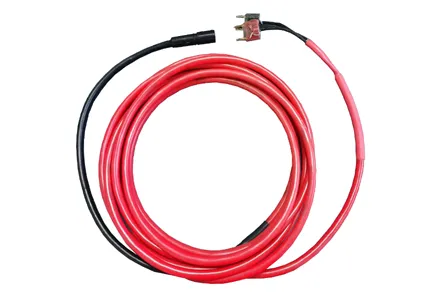
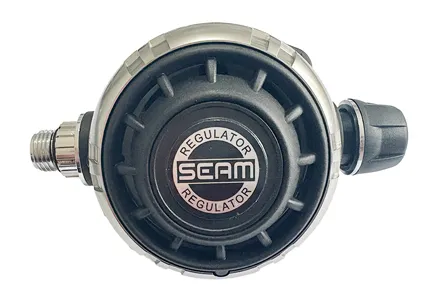
In commercial diving, offshore maintenance, salvage, aquaculture, scientific research, and deep-sea inspection, an umbilical cable is more than a hose or cable assembly—it is the diver's integrated lifeline, the single physical connection between the diver working in a hostile underwater environment and the surface support team responsible for their safety, communication, monitoring, and emergency recovery.
As 2026 marine operations place greater emphasis on risk reduction, emergency response speed, and system reliability under increasingly demanding operational conditions, the design of the umbilical cable has become one of the most consequential safety decisions in commercial diving equipment procurement.
The difference between a properly integrated umbilical and a collection of separate loose lines can determine whether an emergency underwater becomes a controlled, rapidly resolved incident or a catastrophic entanglement that costs a diver their life.
For offshore contractors, harbor maintenance teams, salvage companies, aquaculture operators, and commercial diving service providers evaluating diver umbilical for sale options in 2026, the procurement question is no longer simply, “What is the length and pressure rating?”
The more important question is whether the umbilical integrates all the functions the diver needs into one organized, manageable assembly that reduces entanglement risk, supports continuous communication, enables real-time depth monitoring, provides thermal protection in cold water, and allows the surface team to respond immediately and effectively in an emergency.
SEAM's diving umbilicals are designed for surface-supplied diving operations and can integrate a high-pressure air hose, communication cable, depth hose, video cable, and hot water hose depending on the selected configuration—helping reduce drag and support diver safety in harsh marine environments.
This guide covers the complete picture for commercial diving operators, offshore procurement teams, and marine safety managers: why separate lines increase risk in deep-sea operations, what an umbilical cable is and what its purpose is in diving, how integrated design reduces entanglement and improves emergency response, how to evaluate umbilical components for operational reliability, and what maintenance practices protect umbilical performance and diver safety throughout the equipment's service life.
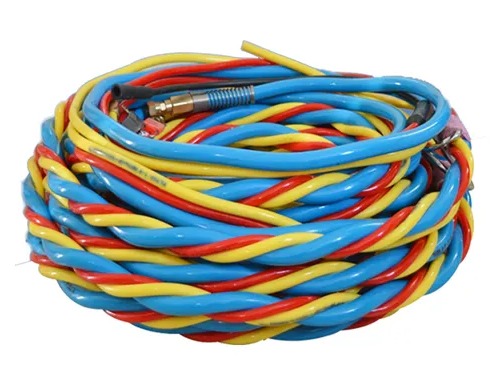
The safety case for integrated umbilical cable design starts with a clear understanding of the specific risk mechanisms that separate, non-integrated hoses and cables create in commercial diving operations—and why each risk mechanism has consequences ranging from operational inefficiency to a life-threatening emergency.
Line entanglement around subsea structures is the most immediately life-threatening risk that separate hoses and cables create in commercial diving operations.
When a diver is working around subsea infrastructure—such as ship hulls, offshore platform legs, harbor structures, aquaculture cages, or salvage wreckage—multiple separate lines have multiple independent opportunities to catch, wrap, or tangle around structural elements.
Each additional loose line increases the probability of entanglement. In low-visibility conditions where the diver cannot clearly see the lines, entanglement can develop rapidly and become impossible to resolve without assistance from the surface team.
An integrated umbilical that combines all functional lines into one organized assembly reduces the number of independent entanglement points from five or six to one. This represents a fundamental safety improvement that careful line management with separate hoses cannot fully replicate.
Delayed emergency response caused by line confusion directly affects the surface team's ability to respond when a diver signals distress.
When a diver is connected to the surface by multiple separate lines—an air hose, communication cable, depth hose, video cable, and hot water hose—the surface team must identify, manage, and coordinate all of these lines simultaneously during an emergency retrieval.
Under the stress and urgency of an emergency response, line confusion can create critical delays that cost seconds or minutes the diver cannot afford.
An integrated umbilical gives the surface team one line to manage, one line to pull, and one line to trace, reducing the cognitive and physical complexity of emergency response.
Increased drag and diver fatigue from multiple separate lines directly affect diver performance and safety throughout the duration of a dive.
Multiple separate lines create more drag in current, more resistance during movement, and a greater physical and cognitive workload for the diver, who must continuously manage their position relative to several independent lines.
Diver fatigue increases accident risk. The accumulated fatigue caused by managing multiple separate lines during a long commercial dive can affect judgment, reaction time, and physical capability at the exact moment when the diver needs these abilities most.
Understanding what an umbilical cable is and what its purpose is in surface-supplied diving—and how integrated design transforms a simple supply line into a complete life-support, communication, monitoring, and emergency-response system—is essential for procurement teams evaluating commercial diving umbilical specifications for safety-critical operations.
The purpose of an umbilical cable in surface-supplied diving is to connect the diver to the surface support system, delivering the essential life-support and operational functions that allow the diver to work safely underwater and the surface team to monitor, communicate with, and recover the diver throughout the dive.
SEAM describes the diving umbilical cable as core equipment for underwater operations because it provides life support by supplying gas, communication, and data transmission—making it one of the most critical pieces of equipment in a surface-supplied diving system.
Depending on the selected configuration, a commercial diving umbilical can integrate the following functions:
| Function | Purpose | Safety Significance |
|---|---|---|
| Breathing gas hose | Supplies air or breathing gas from the surface | Primary life-support function—failure is immediately life-threatening |
| Communication cable | Enables voice communication between the diver and surface team | Critical for instruction, monitoring, and emergency coordination |
| Pneumo and depth hose | Supports depth monitoring | Allows the surface team to track diver position and decompression status |
| Video cable | Transmits underwater visual data | Supports inspection work and surface supervision |
| Hot water hose | Provides thermal support during cold-water diving | Helps prevent hypothermia during cold-water and long-duration operations |
| Strength member and armor | Protects internal lines and supports retrieval | Enables safer emergency recovery under load |
| Outer jacket | Resists abrasion, oil, corrosion, and marine exposure | Protects all integrated functions throughout the dive |
SEAM offers different umbilical configurations to match different operational requirements:
UMB002 2-part umbilical: Integrates a high-pressure air hose and communication cable for standard surface-supplied diving operations.
UMB003 3-part umbilical: Adds a depth hose to provide depth monitoring capability.
UMB005 5-part umbilical: Integrates a high-pressure air hose, communication cable, depth hose, video cable, and hot water hose into one complete assembly for demanding commercial diving operations.

The technical mechanism by which integrated umbilical design reduces entanglement risk, simplifies surface-side line management, and improves emergency response speed—and why these improvements translate into measurable safety outcomes—is essential knowledge for diving safety managers and procurement teams comparing integrated umbilicals with lower-cost separate-line alternatives.
An integrated umbilical cable combines multiple functional lines into one organized assembly, replacing five or six independent entanglement points with a single managed line that the diver and surface team can track, control, and protect as one unit.
SEAM describes its streamlined umbilicals as single, neutrally buoyant assemblies designed to reduce drag and minimize diver fatigue. The assemblies also provide abrasion resistance and durability for harsh marine environments.
These physical characteristics make integrated umbilicals safer and more manageable than separate-line alternatives under demanding operational conditions.
During an emergency, the surface crew must quickly identify the diver's line, communicate clearly, monitor the diver's condition, and assist recovery—all simultaneously and under significant time pressure.
Integrated umbilicals improve emergency response by:
Keeping all critical services in one identifiable line that the surface team can locate, manage, and pull without confusion
Maintaining continuous diver-to-surface communication through the same assembly that delivers breathing gas
Reducing time lost identifying and untangling separate hoses and cables during retrieval
Allowing faster visual and depth-related assessment of the diver's condition and position
The 2026 commercial diving environment places greater demands on umbilical performance, driven by deeper operations, more complex subsea infrastructure, stricter maritime safety requirements, greater emphasis on diver welfare, and increased use of video and data transmission for remote supervision and inspection documentation.
For operations involving low visibility, strong currents, sharp structures, oil and chemical contamination, cold water, and long dive durations, the integrated umbilical's combination of reduced entanglement risk, lower drag, continuous communication, and organized emergency-response capability is not simply a premium option.
For demanding commercial diving operations, it represents the minimum safety standard responsible procurement teams should consider.
The systematic evaluation of umbilical cable components—including the breathing gas hose, communication cable, depth hose, video cable, hot water hose, protective armor, outer jacket, and connectors—against the requirements of a specific diving operation helps ensure that the selected umbilical delivers the life-support reliability and operational performance required for commercial diving safety.
| Component | Function | Buyer Evaluation Criterion |
|---|---|---|
| High-pressure air hose | Delivers breathable gas | Pressure rating, flexibility, and material compatibility |
| Communication cable | Supports diver-to-surface voice communication | Signal clarity, ruggedness, and connector reliability |
| Depth hose and pneumo hose | Supports depth tracking | Accuracy and compatibility with the surface control panel |
| Video cable | Sends visual data to the surface team | Signal stability, durability, and connector protection |
| Hot water hose | Provides thermal support in cold water | Insulation quality, flow compatibility, and temperature rating |
| Protective armor | Protects the integrated bundle | Abrasion resistance, oil resistance, and tensile strength |
| Outer jacket | Provides environmental protection | Flexibility, wear resistance, and seawater and chemical resistance |
| Connectors and terminations | Interface with panels and helmets | Reliability, system compatibility, and corrosion resistance |
For commercial diving operations in offshore, salvage, aquaculture, and industrial environments, umbilical materials must withstand:
Continuous seawater exposure
Abrasion from subsea structures and seabed contact
Oil and chemical contamination in industrial and offshore environments
Cold-water flexibility requirements
The tensile load associated with emergency retrieval under current
SEAM highlights high tensile strength, flexibility, wear resistance, oil resistance, and corrosion resistance as key features of its diver umbilicals, providing the material performance characteristics required for demanding commercial diving operations.
| Operation Type | Recommended Configuration | Key Requirement |
|---|---|---|
| Standard surface-supplied diving | 2-part: air hose and communication cable | Basic life support and communication |
| Inspection and monitoring operations | 3-part: air, communication, and depth hose | Depth tracking for decompression management |
| Video inspection and documentation | 5-part configuration with video cable | Visual data transmission to the surface |
| Cold-water and long-duration diving | 5-part configuration with hot water hose | Thermal protection for diver safety |
| Offshore and industrial operations | 5-part configuration with full armor | Maximum protection in harsh environments |
Procuring the right diver umbilical for sale requires systematic pre-order confirmation of operational requirements, configuration needs, material specifications, and compatibility requirements.
It also requires a maintenance program that protects umbilical performance and diver safety throughout the equipment's service life.
Before requesting a quotation for a diver umbilical, prepare and confirm the following:
Application type: Confirm whether the umbilical will be used for commercial diving, offshore energy, salvage, aquaculture, scientific research, or industrial inspection, and verify that the selected configuration is appropriate for the operating environment.
Required length and working depth: Verify that the pressure rating, buoyancy characteristics, and structural strength are appropriate for the operating depth and current conditions.
Required configuration: Select a 2-part, 3-part, 5-part, or custom configuration based on breathing gas, communication, depth monitoring, video transmission, and thermal support requirements.
Breathing gas hose specification: Confirm the pressure rating, material compatibility, and connection type, and verify compatibility with the surface gas control panel and the diver's helmet or mask.
Communication system compatibility: Verify that the communication cable is compatible with the surface communication panel and diver communication equipment.
Surface control panel and helmet compatibility: Confirm that all connectors and terminations match the existing surface support system.
Buoyancy requirement: Neutral buoyancy can reduce drag and diver fatigue in many commercial diving applications, although specific operations may require different buoyancy characteristics.
Outer protection and armor requirement: Select protection based on abrasion, oil, chemical, and mechanical stress conditions.
Color coding, marking, and custom printing: Confirm operational identification, line management, and company branding requirements.
Inspect the full length before and after every dive: Check for cuts, abrasion, kinks, crushed sections, jacket damage, and connector conditions that could affect any integrated function.
Test communication before every deployment: Verify that the communication cable functions correctly before the diver enters the water.
Confirm breathing gas flow and hose integrity: Verify that the air hose delivers the correct flow at the correct pressure before deployment.
Check depth hose response and surface panel compatibility: Confirm that the depth monitoring system functions correctly to support decompression management.
Flush and dry hot water hoses after each use: Follow the required operational procedure to prevent biological growth and mineral buildup that could reduce flow performance and hose integrity.
Avoid dragging the umbilical over abrasive surfaces: Protect the outer jacket from sharp metal edges, rough seabed surfaces, and abrasive structures.
Coil and store the umbilical correctly: Prevent twisting and kinking, which are common causes of internal hose and cable damage.
Remove damaged umbilicals from service immediately: Do not return a damaged assembly to service until it has been inspected and cleared by qualified personnel.
In commercial diving, offshore maintenance, salvage, and deep-sea inspection, the umbilical cable is one of the most critical pieces of equipment in the surface-supplied diving system.
Its design determines whether it functions as a reliable, organized, emergency-ready lifeline or as a collection of separate lines that create entanglement risk, complicate emergency response, and increase operational complexity in environments where simplicity and reliability matter most.
An integrated umbilical that combines breathing gas supply, communication, depth monitoring, video transmission, and thermal support into one organized, neutrally buoyant, abrasion-resistant assembly is not simply a premium option for demanding operations.
It is a safety standard that responsible commercial diving procurement teams should consider in 2026.
SEAM provides commercial diving umbilicals, surface-supplied diving equipment, diving communication systems, air control panels, compressors, and related diving solutions for commercial diving, offshore energy, salvage, aquaculture, search and recovery, scientific research, and industrial underwater operations.
Customization options, technical support, and quality management systems are available for professional diving equipment buyers.
Contact SEAM and Haiyun Dive to discuss the required umbilical length, operating depth, 2-part, 3-part, or 5-part configuration, air supply specification, communication system, video cable, hot water hose, surface control panel compatibility, and custom marking requirements.
SEAM can help evaluate the right integrated umbilical cable specification for your commercial diving operation and provide the technical documentation and supply reliability required for professional diving safety equipment procurement.
The purpose of an umbilical cable in surface-supplied diving is to connect the diver to the surface support system, delivering the essential life-support and operational functions that allow the diver to work safely underwater.
Depending on the configuration, a commercial diving umbilical supplies breathing gas from the surface, enables voice communication between the diver and surface team, supports depth monitoring for decompression management, transmits video data for inspection and supervision, and provides hot water for thermal protection during cold-water operations.
SEAM describes the diving umbilical cable as core equipment for underwater operations because it provides life support through gas supply, communication, and data transmission.
An integrated umbilical reduces the number of independent entanglement points from five or six separate lines to one organized assembly, significantly reducing the risk of line entanglement around subsea structures in low-visibility conditions.
It also simplifies surface-side line management during emergency response, giving the surface team one line to identify, manage, and pull rather than multiple separate lines that can create confusion and delay during a time-critical emergency.
The integrated assembly also reduces drag and diver fatigue compared with multiple separate lines, supporting diver performance and safety throughout the dive.
A 2-part umbilical integrates a high-pressure air hose and communication cable, providing basic life-support and communication functions for standard surface-supplied diving.
A 3-part umbilical adds a depth hose for depth monitoring capability, supporting decompression management during deeper operations.
A 5-part umbilical integrates a high-pressure air hose, communication cable, depth hose, video cable, and hot water hose into one complete assembly, providing life support, monitoring, inspection, and thermal protection for demanding commercial diving operations.
SEAM offers all three configurations for different diving scenarios.
A hot water hose is needed during cold-water diving operations where the water temperature creates a risk of hypothermia during the planned dive duration.
This commonly includes offshore operations in northern or southern latitudes, deep-water operations where temperature decreases with depth, and long-duration commercial dives where even moderate water temperatures can create cumulative thermal stress.
Hot water delivered through the umbilical circulates through the diver's suit to help maintain body temperature, safety, and performance throughout the dive.
Buyers should confirm the required umbilical length and working depth, the required 2-part, 3-part, or 5-part configuration, the breathing gas hose pressure rating and compatibility with the surface gas control panel, and communication cable compatibility with the surface communication system and diver equipment.
They should also confirm video cable and hot water hose requirements, buoyancy characteristics, drag performance, outer protection and armor specifications for abrasion, oil, and chemical exposure, and the quality documentation and certification requirements of the operation's safety management system.