For dive shops, resort operators, liveaboards, and coastal rental centers managing a commercial scuba tank fleet in 2026, the carrying system that supports each cylinder every day is not a secondary accessory—it is a core operational asset that directly determines maintenance cost, equipment service life, rental turnover speed, and long-term fleet ROI.
A scuba tank is only as practical as the backpack, harness, buckles, and frame that carry it. In harsh saltwater environments, equipment may be used multiple times per day, rinsed quickly between sessions, stacked wet, dragged across docks, and adjusted by divers of different sizes and experience levels. The material quality and design of the carrying system determine whether the rental fleet remains serviceable for three to five years or requires frequent replacement within the first season.
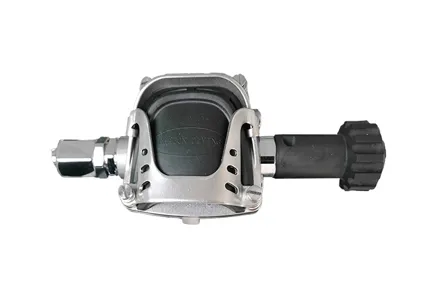
The selection of the right scuba tank carrying solutions—and the complementary scuba tank pro valve that manages air delivery and regulator connection—requires a systematic evaluation of material corrosion resistance, drying speed, cleaning efficiency, structural durability, and compatibility with standard aluminum and steel cylinders.
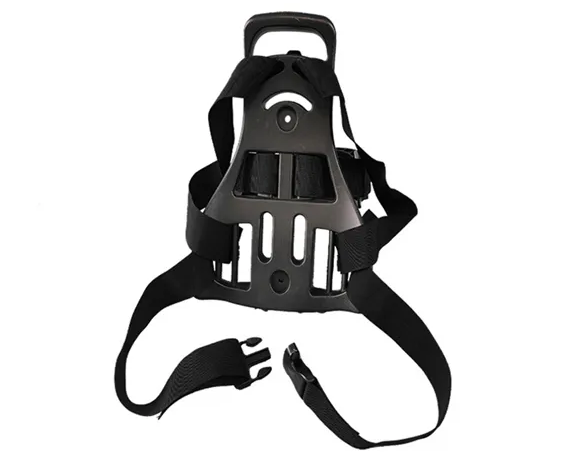
SEAM's tank backpack is specified with a lightweight corrosion-resistant polymer composite frame, abrasion-resistant nylon harness, stainless steel or plastic buckles, non-slip tank band, quick-release adjustable straps, and an ergonomic waist belt for load distribution—providing the material combination and design features that commercial saltwater rental operations require.
This guide covers the complete picture for dive shop managers, resort equipment buyers, liveaboard operators, and commercial diving equipment procurement teams: why saltwater rental centers burn through low-quality accessories, what a tank backpack is and why it matters as a core scuba tank accessory, how different frame and harness materials perform in saltwater environments, how to evaluate backpack design for rental-center cleaning and drying efficiency, and what maintenance practices protect carrying system investment throughout the equipment's service life.
The commercial case for investing in high-quality scuba tank carrying solutions starts with an honest assessment of the specific degradation mechanisms that saltwater rental environments create—and why the true cost of low-quality backpack materials is measured not only in purchase price, but also in replacement frequency, maintenance labor, customer complaints, and rental downtime.
Metal corrosion at buckles, screws, and hardware is the most rapid and visually obvious failure mode in low-quality scuba tank accessories exposed to saltwater. Standard steel buckles and hardware begin to rust within weeks of regular saltwater exposure, creating orange staining on harness webbing, stiff or seized adjustment mechanisms, and eventual structural failure at load-bearing connection points.
For rental centers where buckle failure during a dive creates a safety incident and customer complaint, hardware corrosion is not simply an aesthetic problem—it is a safety and liability risk that requires proactive management through material selection.
Moisture retention in thick padding and dense webbing is the failure mode that creates the mildew, odor, and biological growth problems that are among the most persistent maintenance challenges in tropical and coastal rental operations.
Backpacks with thick foam padding and dense fabric webbing absorb significant amounts of water during use and rinsing. In the warm, humid conditions of tropical rental centers, this retained moisture creates an ideal environment for mildew growth, bacterial colonization, and persistent odors that customers notice and complain about.
Equipment that smells bad creates negative customer experiences that can damage the rental center's reputation regardless of how well the diving session itself goes.
Frame cracking under repeated tank weight and handling stress is the structural failure mode that creates the most sudden and commercially disruptive equipment failures.
Cheap plastic frames that are not designed for the weight of a full scuba tank—typically 12 to 18 kilograms for a steel cylinder—can develop stress cracks at mounting points and structural joints after repeated loading and unloading cycles. Frame failure during a dive creates an immediate safety risk and requires the rental unit to be taken out of service until repaired or replaced.
For rental centers, the true cost of low-quality carrying systems includes:
The direct replacement cost of failed equipment
Staff labor spent on cleaning, inspection, and repair
Rental downtime while equipment is being repaired or replaced
The customer satisfaction impact of uncomfortable or malodorous equipment
The safety inspection workload created by frequent hardware failures
When these costs are calculated across a rental fleet over a full operating season, the total cost of low-quality equipment consistently exceeds the cost of investing in properly specified, saltwater-resistant carrying systems from the beginning.
Understanding what a scuba tank backpack is—and how its design and material specification determine its performance as a commercial rental asset in saltwater environments—is essential for procurement teams evaluating carrying system options for rental fleet investment.
A scuba tank backpack is a wearable support system that secures a diving cylinder to the diver's back. It includes a rigid or semi-rigid frame, tank band, shoulder straps, waist belt, buckles, and attachment points.
SEAM describes its tank backpack as designed for stability and load management, with a rigid frame that distributes tank weight and reduces strain on the back and shoulders. It is designed to fit standard aluminum or steel scuba tanks.
For rental centers, the tank backpack should be treated as a core scuba tank accessory, not a low-value add-on, because it is the component that determines diver comfort, cylinder security, rental fitting speed, and maintenance workload across every rental session.
A well-specified tank backpack that is comfortable, quick to adjust, easy to rinse, and fast to dry improves every aspect of the rental operation, from customer experience to staff efficiency.
A complete scuba tank rental setup requires both a reliable carrying system and a reliable air delivery system. The tank backpack secures and carries the cylinder, while the scuba tank pro valve manages air delivery and regulator connection.
SEAM's Tank Pro Valve uses chrome-plated brass construction, supports yoke or DIN connection types, has a 230 bar working pressure, and is designed for aluminum cylinders. It includes a high-flow airflow channel, reinforced stem and handwheel, burst disk, and precise pressure management for reliable performance in saltwater and freshwater environments.
For rental centers building a complete scuba tank accessory package, evaluating the backpack and valve together—for material compatibility, maintenance requirements, and operational reliability—provides a more complete picture of the total fleet investment than evaluating each component in isolation.
The technical mechanism by which different frame and harness materials respond to saltwater exposure, moisture retention, mechanical wear, and cleaning cycles—and why the right material combination delivers significantly better rental ROI than any single material alone—is the core engineering knowledge that rental center buyers need when specifying scuba tank carrying solutions for commercial saltwater service.
| Material | Corrosion Resistance | Drying Speed | Structural Strength | Best Application in Tank Backpack |
|---|---|---|---|---|
| Polymer composite or HDPE-style frame | Excellent—no corrosion | Fast—low water absorption | Good when properly molded | Frame, backplate, and structural support |
| Stainless steel hardware | Very good—resists saltwater corrosion | Fast—non-absorbent | Excellent for load-bearing points | Buckles, screws, and load-bearing hardware |
| Heavy-duty nylon webbing | Good—does not corrode | Moderate—requires proper drying | Good for harnesses and straps | Shoulder straps, waist belt, and harness webbing |
| Plastic quick-release buckles | Excellent—no corrosion risk | Fast—non-absorbent | Good for adjustment points | Quick-release adjustment and fitting |
| Non-slip tank band | Good when properly specified | Moderate | Essential for cylinder security | Cylinder retention system |
SEAM's backpack specification uses a polymer composite frame, abrasion-resistant nylon harness, and stainless steel or plastic buckles. It also includes quick-release adjustable straps, a non-slip tank band, corrosion-resistant hardware, and an ergonomic waist belt—providing the material combination that addresses the saltwater degradation mechanisms rental environments create.
For rental center applications where weight, corrosion resistance, and cleaning efficiency are the primary performance requirements, polymer composite frames provide a better combination of properties than metal frames.
A well-designed polymer composite frame is significantly lighter than a steel frame, reducing the total weight of the carrying system and making it easier for staff to handle and store multiple units.
It does not corrode in saltwater, eliminating the rust staining and structural weakening that metal frames can develop over time. It also has very low water absorption, allowing it to dry quickly after rinsing and reducing the moisture retention that creates mildew and odor problems.
Buckle material selection is the detail that most directly affects the day-to-day maintenance workload of a rental center.
Standard steel buckles corrode rapidly in saltwater environments, requiring frequent inspection, lubrication, and eventual replacement. Stainless steel buckles provide much better corrosion resistance but are heavier and more expensive.
Plastic quick-release buckles provide excellent corrosion resistance, light weight, and easy operation, making them suitable for adjustment points where corrosion-free operation is more important than maximum load strength.
The best durable scuba tank holder for rental use combines stainless steel hardware at load-bearing structural points with plastic buckles at adjustment and quick-release points. This approach combines the strength of stainless steel where it matters most with the corrosion-free convenience of plastic where it provides the greatest operational benefit.
The design features that make a scuba tank backpack suitable for commercial rental center use—and the maintenance practices that protect the carrying system investment throughout the equipment's service life—are the operational factors rental center managers need to evaluate when reviewing backpack specifications and establishing maintenance programs.
| Design Feature | Commercial Benefit for Rental Centers |
|---|---|
| Open rigid frame | Easier rinsing and faster drying between sessions |
| Minimal thick padding | Less trapped water, salt, and odor |
| Quick-release straps | Faster fitting and return processing, supporting more rentals per day |
| Smooth surfaces | Less salt crystal buildup and easier cleaning |
| Corrosion-resistant hardware | Fewer rust-related failures and safety incidents |
| Non-slip tank band | Better cylinder security and fewer customer complaints |
| Lightweight structure | Easier staff handling and storage |
| Standard tank compatibility | Simplifies fleet management and spare-parts planning |
| Ergonomic waist belt | Better load distribution and improved diver comfort |
A well-designed, low-maintenance tank backpack improves rental ROI through multiple mechanisms:
Reduced replacement frequency through longer service life
Reduced staff cleaning time through an easier-to-rinse design
Fewer hardware corrosion failures through corrosion-resistant materials
Improved customer satisfaction through better comfort and faster fitting
Reduced safety inspection workload through more reliable components
For a rental center operating a fleet of twenty to fifty tank backpacks, the cumulative ROI improvement from investing in properly specified carrying systems rather than low-cost alternatives can be significant across a full operating season.
Commercial-grade scuba tank carrying solutions deliver the most value in the following environments:
Tropical resort dive centers: Daily saltwater exposure and high rental volume create the most demanding service conditions.
Liveaboard operators: Equipment must survive extended offshore trips without access to replacement parts.
Training schools: Equipment is adjusted repeatedly by students of different sizes and experience levels.
Commercial diving support operations: Equipment reliability is a safety-critical requirement.
High-utilization rental operations: The cost of equipment failure through downtime, customer complaints, and safety risk exceeds the cost of investing in properly specified equipment.
Procuring the right scuba tank carrying solutions for a commercial rental fleet requires systematic pre-order confirmation of material specifications, compatibility requirements, and maintenance support. It also requires a maintenance program that protects the equipment investment throughout the carrying system's service life.
Before requesting a quotation for scuba tank backpacks and accessories, prepare and confirm the following:
Required quantity and fleet size: Confirm the number of tank backpacks required for the rental fleet, plus spare units for rotation during maintenance.
Tank type and size: Confirm whether the cylinders are aluminum or steel, as well as the cylinder diameter and length, to verify compatibility with the selected backpack.
Rental center location and saltwater exposure level: Define whether the operation is tropical, coastal, liveaboard, or inland to determine the required corrosion resistance for the frame, hardware, and buckles.
Expected daily usage frequency: Estimate the number of rental sessions per day per unit to determine the required structural durability for the frame and harness.
Preferred frame material: Confirm whether a polymer composite, HDPE-style, or another frame material is required, and verify that the material provides adequate corrosion resistance and structural strength.
Buckle preference: Decide whether stainless steel, plastic, or a combination is appropriate based on the load-bearing and adjustment requirements of each connection point.
Harness material requirement: Confirm the use of abrasion-resistant nylon or another suitable material and verify that it provides adequate comfort, durability, and drying speed.
Matching scuba tank pro valve requirement: Determine whether matching valve solutions are required and evaluate the valve and backpack together for material compatibility, maintenance requirements, and operational reliability.
Spare-parts requirement: Confirm the required straps, buckles, tank bands, and hardware, and verify that the supplier can provide replacement components for the selected backpack model.
Rinse backpacks with fresh water after every saltwater use: Thorough freshwater rinsing removes salt crystals that would otherwise accelerate corrosion and material degradation between sessions.
Open straps and buckles fully during rinsing: Salt crystals accumulate in adjustment mechanisms and strap channels where water flow is restricted. Opening these areas during rinsing helps ensure complete salt removal.
Remove sand from tank bands and adjustment points: Sand particles trapped in the tank band and adjustment mechanisms create abrasive wear that accelerates component degradation.
Hang equipment in a shaded, ventilated drying area: Direct sunlight accelerates UV degradation of nylon webbing and plastic components, while poor ventilation slows drying and promotes mildew growth.
Inspect buckles, tank bands, stitching, and frame edges daily: Early detection of wear, cracking, or corrosion allows components to be replaced before failure creates a safety incident or rental downtime.
Replace worn straps before failure: A visibly worn, frayed, or weakened strap should be replaced immediately rather than used until complete failure during a rental session.
Pair backpack checks with tank valve inspection routines: The scuba tank pro valve and tank backpack should be inspected together as part of a complete rental-unit safety check.
In 2026, rental centers that achieve the best long-term ROI from their scuba tank fleet investment are those that evaluate carrying system quality with the same rigor they apply to cylinder selection.
This means specifying polymer composite frames that resist saltwater corrosion without adding unnecessary weight, abrasion-resistant nylon harnesses that provide comfort and durability across thousands of rental sessions, corrosion-resistant hardware that reduces rust-related safety incidents and maintenance workload, and quick-release designs that speed up rental fitting and return processing.
The right scuba tank accessories—including a properly specified tank backpack and a reliable scuba tank pro valve—are not costs to minimize, but investments that can deliver lower maintenance expenses, longer service life, and stronger rental ROI across every operating season.
SEAM supplies tank backpacks, tank pro valves, 8L and 12L scuba cylinders, and broader commercial and scuba diving equipment categories for leisure, tourism, rescue, civil engineering, naval, salvage, and offshore applications.
Contact SEAM today to discuss your rental fleet size, tank type, saltwater exposure level, preferred backpack material, buckle requirements, spare-parts plan, and whether you also need matching scuba tank pro valve solutions.
SEAM can help evaluate the right scuba tank carrying solution for your commercial rental operation and provide the equipment quality and supply reliability that demanding saltwater rental environments require.
The best material combination for saltwater rental centers is a corrosion-resistant polymer composite or HDPE-style frame for structural support, abrasion-resistant nylon webbing for the harness and straps, stainless steel hardware at load-bearing structural points, and plastic quick-release buckles at adjustment points.
This combination balances corrosion resistance, light weight, drying speed, and structural durability for high-frequency saltwater rental use.
A tank backpack is a core scuba tank accessory because it determines diver comfort, cylinder security, rental fitting speed, and maintenance workload across every rental session.
A well-specified tank backpack that is comfortable, quick to adjust, easy to rinse, and fast to dry improves every aspect of the rental operation—from customer experience and safety to staff efficiency and equipment service life.
The tank backpack secures and carries the cylinder, while the scuba tank pro valve manages air delivery and regulator connection.
For rental centers building a complete scuba tank accessory package, evaluating the backpack and valve together—for material compatibility, maintenance requirements, and operational reliability—provides a more complete picture of the total fleet investment and ensures that both components meet the durability and maintenance standards required for commercial saltwater rental service.
A durable scuba tank holder for commercial rental use should have a rigid corrosion-resistant frame that does not crack under repeated tank weight, a non-slip tank band that secures the cylinder reliably, a strong harness with corrosion-resistant hardware, smooth surfaces that are easy to rinse and quick to dry, and compatibility with standard aluminum and steel tanks.
The design should minimize hidden areas where salt, sand, and moisture can accumulate between cleaning sessions.
Rinse the backpack with fresh water after every saltwater use while keeping buckles and straps fully open. Remove sand from tank bands and adjustment points, hang the equipment in a shaded and ventilated drying area away from direct sunlight, inspect buckles, tank bands, stitching, and frame edges daily, replace worn straps before failure, and pair backpack checks with tank valve inspection routines as part of a complete rental-unit safety check.
Not always. Stainless steel is the preferred choice for load-bearing structural hardware where maximum strength is required.
However, for adjustment buckles and quick-release points where corrosion-free operation and light weight are more important than maximum load strength, plastic buckles provide better corrosion resistance, lighter weight, and easier operation.
A combination of stainless steel at structural points and plastic at adjustment points is therefore an effective hardware strategy for saltwater rental applications.
SEAM's tank backpack uses a lightweight corrosion-resistant polymer composite frame, abrasion-resistant nylon harness, stainless steel or plastic buckles, quick-release adjustable straps, a non-slip tank band, and an ergonomic waist belt.
It is designed to fit standard aluminum or steel scuba tanks and meet the durability, cleaning efficiency, and maintenance requirements of commercial saltwater rental operations.