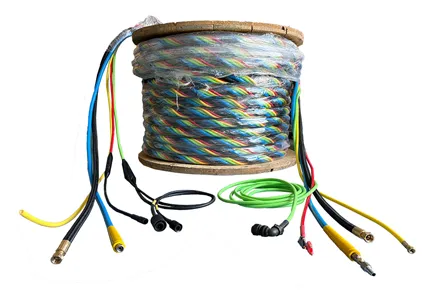
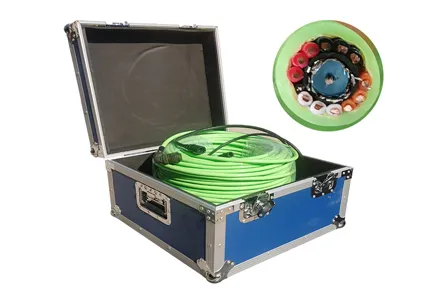
In 2026, fleet operators are managing a converging set of pressures that did not exist at the same intensity five years ago: off-hire windows are shrinking, class survey requirements are tightening, and dry-docking costs have risen sharply enough that every unnecessary docking task carries real financial weight.
The decision that drives most of this cost is not the docking itself—it is the uncertainty before it. Without clear visual evidence of hull condition, propeller damage, or sea chest status, maintenance managers default to conservative decisions: dock when in doubt, scope broadly, and hope the findings justify the cost.
A properly specified cctv waterproof camera changes that dynamic. Paired with a structured commercial diving video system workflow, it gives fleet operators the documented visual evidence needed to make faster, better-calibrated decisions—and often to avoid or reduce docking scope entirely.
This guide covers what to specify, what to verify, and how to calculate the operational value before placing an order.
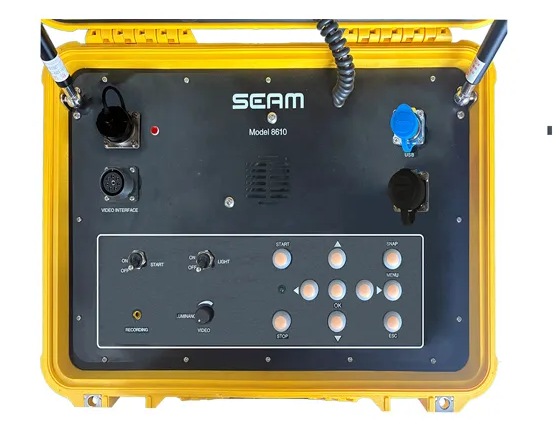
A cctv waterproof camera system for commercial diving is not a single component. It is an integrated workflow that moves visual information from the underwater inspection zone to the decision-maker on deck in real time, with a recorded file that supports maintenance planning, class documentation, and incident reporting.
Underwater camera and integrated lighting → cable or umbilical → topside monitor and DVR → maintenance record
Each link in this chain must be specified to match the operating conditions. A camera rated for 100 m depth is irrelevant if the connector fails at 20 m. A high-resolution sensor is irrelevant if the lighting creates glare that obscures the surface being inspected. A clear live image is not enough if the recording format is not compatible with the fleet's maintenance software.
Real-time visuals reduce repeat dives. When the topside supervisor can see exactly what the diver sees, decisions are made during the dive rather than after it. The diver does not need to surface, describe what was observed, and re-enter the water to investigate further. One dive with a commercial diving video system can replace two or three dives without one.
Recorded evidence supports faster maintenance decisions. A timestamped, GPS-tagged video record of hull condition allows the maintenance manager, class surveyor, and shipowner to review the same evidence simultaneously. Disagreements about condition severity that would previously require another dive can be resolved by reviewing the recording.
Earlier detection prevents damage escalation. Coating breakdown identified at the early blistering stage costs a fraction of the corrosion remediation required if the same area is discovered at the next scheduled dry-docking two years later. A cctv waterproof camera inspection between dockings converts “we will see it at the next dry-dock” into “we know the current condition and can plan accordingly.”
Depth rating with a documented safety margin, not only the nominal rated depth
Sealing method and O-ring inspection and replacement protocol
Connector reliability in saltwater and under repeated mate and demate cycles
Low-light performance specification, including lux sensitivity rather than only resolution
Recording workflow compatibility with the fleet's maintenance documentation system
Specifying a commercial diving video system without locking all component parameters is a primary cause of post-purchase performance disappointment. The following specifications determine whether the system delivers usable inspection data in real operating conditions.
| Parameter | What to Specify | Why It Matters |
|---|---|---|
| Resolution | Minimum 1080p for detailed defect documentation | Crack and corrosion detail require sufficient pixel density |
| Frame rate | 25–30 fps minimum for smooth real-time viewing | Lower frame rates produce motion blur during diver movement |
| Low-light sensitivity | Lux rating at the minimum acceptable image quality | Visibility drops rapidly with depth and turbidity |
| Color performance | Color rendering performance under artificial lighting | Accurate color matters for coating condition assessment |
| Lens field of view | Wide 90–120° for overview; narrow 40–60° for detail | Different inspection tasks require different fields of view |
For hull condition surveys, a wide-angle lens that shows context is more useful than a narrow lens that shows detail without spatial reference. For propeller blade or weld inspection, a tighter field of view with higher detail is appropriate. Consider whether fleet operations require both, as some cctv waterproof camera systems support interchangeable lens modules.
Rated depth: Must exceed the maximum operating depth with a minimum 1.5× safety margin for operational confidence.
Housing material: Anodized aluminum is suitable for most commercial diving depths, while titanium may be required for demanding deepwater applications.
Window material: Optical-grade tempered glass or sapphire provides scratch resistance. Acrylic windows can degrade rapidly in commercial use.
Lighting is one of the most under-specified components in commercial diving video system purchases.
Lumen output: Match it to operating visibility and working distance. More light is not always better because excessive light at close range can create glare.
Beam angle: Use flood beams for general surveys and spot or combination beams for detailed inspections.
Glare management: Forward-facing lights mounted directly on the camera body can create backscatter in turbid water. Offset lighting positions can reduce this problem.
Heat management: LED thermal management affects long-dive performance. Confirm the rated continuous burn time.
Monitor size and brightness: A minimum 10-inch display with approximately 1,000-nit brightness supports deck use in daylight. Smaller or dimmer monitors can make real-time supervision impractical outdoors.
DVR or NVR: Confirm timestamping capability, storage capacity, and file export format before purchase. Proprietary formats that cannot be exported to standard video files create documentation workflow problems.
Streaming: When live streaming to shore-based surveyors or remote superintendents is required, confirm bandwidth requirements and system compatibility.
Cable length: Specify the full length required for the deepest operation plus deck handling. Insufficient cable length is a common operational limitation discovered after purchase.
Strain relief: Require strain relief at both terminations, which are the most failure-prone points on an underwater cable assembly.
Connector type: Confirm wet-mate capability when the system will be deployed and recovered repeatedly. Dry-mate connectors require full recovery before disconnection.
Spare-parts availability: Confirm that replacement connectors, O-rings, and cable sections are stocked by the supplier.
The financial case for a cctv waterproof camera system is strongest in inspection scenarios where uncertainty is most expensive. These applications are where documented visual evidence most directly reduces docking cost or shortens off-hire time.
Coating damage, impact marks, and corrosion hotspots identified and documented between dockings allow maintenance managers to differentiate between areas requiring immediate attention and areas that can wait for the next scheduled docking.
Without visual evidence, the default response is conservative: assume the worst and scope the docking broadly. With recorded commercial diving video system evidence, the docking scope can focus on confirmed defect areas.
A vessel that has experienced unusual vibration or propeller contact has two options: dock for inspection or deploy a diver with a cctv waterproof camera to assess the condition before deciding.
When blade-edge deformation does not require immediate dry-docking, a recorded underwater inspection provides evidence that supports keeping the vessel in operation until the next scheduled docking rather than pulling it off-hire immediately.
Blockage caused by marine growth or debris reduces cooling efficiency and can trigger machinery temperature alarms. A commercial diving video system inspection confirms the condition of sea chest gratings and allows clearance work to be completed in the water rather than in dry-dock, with recorded verification that the work was completed and the area is clear.
Routine monitoring of anode consumption with photographic records allows replacement to be planned within the fleet maintenance schedule rather than discovered after excessive depletion at the next dry-docking.
Recorded weld visual inspections can support class survey documentation and reduce the scope of in-dock survey work.
Following a grounding, contact event, or unexpected impact, a cctv waterproof camera inspection provides rapid evidence for insurance reporting, class notification, and the decision about whether the vessel can continue trading or must be docked immediately.
The speed and quality of this evidence have direct financial value through reduced off-hire time and clearer insurance claim documentation.
Before specifying a cctv waterproof camera, define the following inputs:
| Input | Why It Determines Specification |
|---|---|
| Maximum operating depth | Sets the minimum housing depth rating |
| Typical water visibility | Determines lighting power and beam angle |
| Primary inspection targets | Determines resolution, field of view, and lighting configuration |
| Required working distance | Affects lens choice and lighting placement |
| Recording and reporting requirements | Determines DVR capability and file format |
| Power supply on the vessel | Confirms cable and system power compatibility |
Mount and handle options: A commercial diving video system used for hull inspection requires a different handling configuration from one used for thruster inspection or sea chest surveys. Confirm that the camera housing supports the mounting options required for the primary inspection tasks, including a diver-held handle, pole mount, or ROV integration bracket.
Data workflow: Define before purchase how inspection recordings will be named, stored, and transferred to the maintenance management system. A cctv waterproof camera that produces excellent video in a format that cannot be imported into the maintenance software creates a documentation problem after the equipment is already on board.
Power supply compatibility: Confirm the topside power supply voltage and current capacity against the system requirements before ordering. A mismatch discovered on board may require an adapter that is not available in port.
Pressure and leak test: Confirm housing seal integrity at the rated-depth pressure before the system enters service.
Image test in low-light and glare conditions: Verify that the camera and lighting combination produces usable images under the worst expected conditions.
Cable pull and strain-relief verification: Confirm that strain relief at both cable terminations withstands the tension loads expected during deployment and recovery.
Post-dive rinse: Freshwater rinsing of the complete cctv waterproof camera assembly after every saltwater dive is one of the most cost-effective maintenance actions. Salt crystal deposition in connector threads and O-ring grooves is a leading cause of connector failure and housing seal degradation.
Connector cleaning and inspection: Connector contacts should be inspected and cleaned at defined intervals rather than only when a fault is detected. Corrosion on electrical contacts develops progressively and can cause intermittent faults before complete failure. Identifying early-stage corrosion during routine inspection helps prevent mid-dive communication loss.
O-ring inspection and replacement: O-rings must be inspected before every dive for cuts, compression set, and contamination. A damaged O-ring that allows water ingress at depth can destroy the camera electronics and create a complete replacement cost. O-ring replacement is a low-cost preventive action against a high-cost failure.
Lens and window protection: The camera window is a precision optical surface. Storage and transport without a protective cap, or cleaning with abrasive material, can cause scratches that progressively degrade image quality. Specify protective caps for all ports as part of the standard equipment kit.
For a fleet operating multiple vessels with commercial diving video system equipment, minimum onboard spares should include:
O-ring sets for all housing and connector sizes in use
Protective end caps for camera and connector ports
Replacement connector inserts for the most frequently mated connections
Spare lights or light modules when LED replacement is field-serviceable
A cable repair kit for the cable type in use
| TCO Factor | Procurement Action | Financial Impact |
|---|---|---|
| Repairability | Specify field-serviceable O-rings, connectors, and lights | Extends system life and avoids full replacement after component failure |
| Standardization | Use the same system model across multiple vessels | Reduces spare-parts inventory and simplifies crew training |
| Lead time for spares | Confirm the supplier's stocking commitment | Reduces downtime when maintenance is required |
| Warranty scope | Define in the PO what is covered and for how long | Protects against early failure costs |
| Training and handling SOPs | Require them with the shipment | Reduces operator-induced damage and extends service life |
The total cost of ownership for a cctv waterproof camera fleet program is dominated by failure-driven replacement rather than planned maintenance cost. Every connector failure, O-ring ingress event, or cable damage incident prevented through correct maintenance directly reduces TCO. Standardizing systems across the fleet also reduces the spare-parts inventory required to support them.
A well-specified cctv waterproof camera system is one of the most cost-effective tools available to maritime fleet operators in 2026 for reducing inspection uncertainty, shortening maintenance decision cycles, and controlling dry-docking cost.
When standardized across the fleet as a commercial diving video system kit—with consistent specifications, a defined recording workflow, and a structured maintenance SOP—it delivers documented operational value that compounds across every inspection event.
The financial case is straightforward: reduce unnecessary docking tasks, shorten off-hire time, and produce the documented evidence that supports better decisions. The specification work that makes this possible happens before the purchase order is issued.
Visit the product page and submit your operating conditions, quantity, key specifications, target performance metrics, and current problems to receive a best-fit configuration recommendation and quotation.
View commercial diving video system options and request a quote
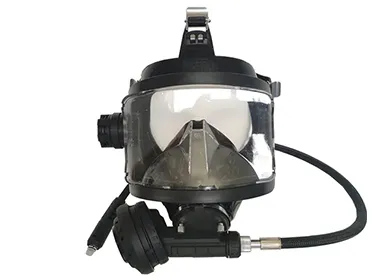
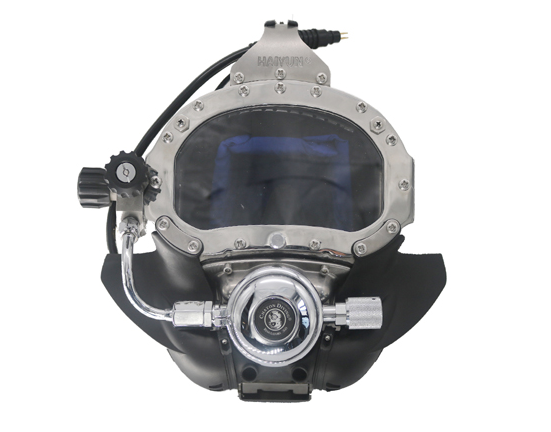
A commercial diving video system is a professional underwater imaging setup used by divers for real-time visual inspection and documented recording. It consists of a depth-rated cctv waterproof camera housing, integrated or separate underwater lighting, a cable connecting the camera to the topside unit, and a topside monitor and recording device that allows the deck supervisor to view the inspection live and capture a timestamped record for maintenance documentation, class survey support, or incident reporting.
A diver-operated cctv waterproof camera is typically faster to deploy, lower in unit cost, and more maneuverable for close-contact inspection tasks in accessible areas. It is a practical choice for routine hull surveys, propeller checks, and sea chest inspections in harbors and sheltered anchorages.
An ROV reduces diver exposure in high-current or hazardous environments, can operate where diving is not permitted, and may be more appropriate for long-duration deep surveys. The right choice depends on operating depth, current conditions, access constraints, the organization's diving safety policy, and the level of documentation detail required.
ROI for a commercial diving video system comes from four main sources: reduced dive frequency through better first-dive information quality, faster maintenance decisions through documented visual evidence, avoided or reduced dry-dock scope through in-water condition verification, and shorter off-hire time for post-incident assessments.
For many fleet operators, a system can pay back within the first avoided unnecessary docking task or the first incident response in which documented underwater evidence shortens the class notification and repair decision process. The payback period may be measured in months rather than years for vessels with regular inspection requirements.
No major retrofit is required for most vessels. The practical considerations to confirm before deployment include the availability of a compatible power supply on deck, a safe cable-routing path from the deployment point to the topside monitor, a suitable diver deployment and cable-management position, and a method for recording storage and file transfer to the maintenance management system.
A cctv waterproof camera system designed for commercial diving operations is intended to be portable and vessel-agnostic. The required integration planning is primarily operational rather than structural.
To receive an accurate configuration recommendation for a commercial diving video system, provide the maximum operating depth, typical water visibility conditions, primary inspection targets, required image-detail level, preferred cable length, recording requirements, topside power supply specification, quantity of systems required, preferred mounting or handling configuration, and any current problems with existing equipment such as poor image quality, connector failures, cable damage, or inadequate lighting.