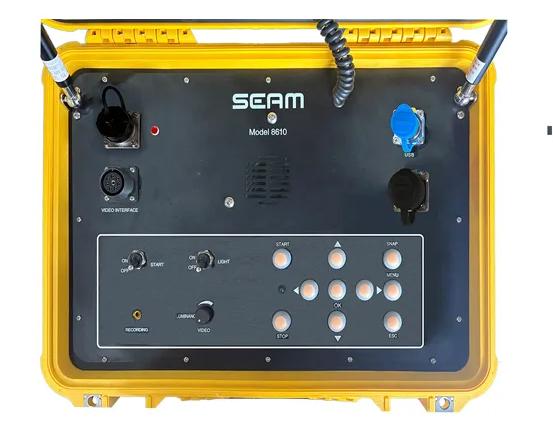
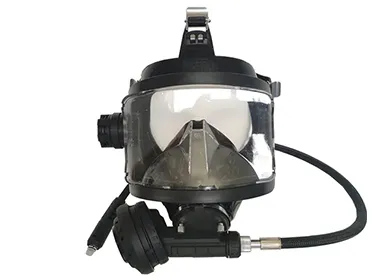
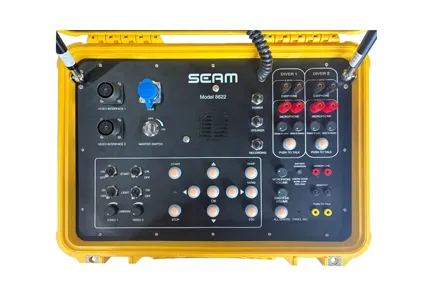
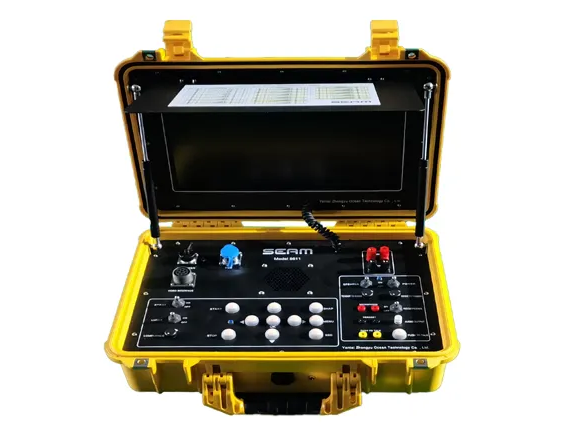
For subsea pipelines, offshore platforms, dams, and ports, video clarity is only half the challenge — the camera must also survive pressure, corrosion, and extended deployments without failure. Choosing the right CCTV waterproof camera starts with understanding what depth ratings actually mean, how housing integrity is achieved, and what "waterproof" translates to at operational depth. This guide turns depth-rating terminology into a practical buying checklist for a complete commercial diving video system designed for professional underwater work.
| Term | What It Means | Practical Implication |
|---|---|---|
| Rated depth | The depth to which the manufacturer has designed and tested the housing | Do not exceed this without engineering verification |
| Test depth | Often 1.25–1.5x rated depth — used to establish safety margin | Confirms the rated depth includes a built-in margin |
| Static pressure | Pressure at a fixed depth — what most ratings are based on | Dynamic conditions (currents, impacts) add stress beyond static calculation |
| IP rating | Ingress Protection — primarily for dust and rain/splash exposure | Not a substitute for a true depth pressure rating |
An IP68-rated device is protected against continuous immersion — but the test conditions (typically 1.5 m for 30 minutes in freshwater) have nothing to do with the pressure at 50 m, 100 m, or deeper operational sites. A consumer camera marked IP68 will fail long before it reaches a working dive depth.
The practical rule: match the camera's rated depth to your maximum working depth, then add an operational margin of at least 20–30% to account for dynamic conditions, equipment wear, and deployment variability.
The camera sensor is not what fails at depth — the housing, seals, and connectors are the failure points. Every element that connects the interior to the exterior is a potential ingress path.
| Component | What It Does | What to Specify |
|---|---|---|
| Housing material | Contains internal pressure differential | 316L stainless, anodized aluminum, or titanium for saltwater deployments |
| O-ring and seal design | Primary barrier against water ingress | Dual O-ring at every penetration; material compatible with seawater temperature range |
| Faceplate or dome port | Optical window — must withstand pressure and resist scratching | Acrylic or borosilicate glass; thickness matched to rated depth |
| Wet-mate connectors | Allows connection while submerged | Rated to deployment depth; manufacturer-specified mating cycle count |
| Cable penetrators | Where cable passes through housing wall | Compression-type penetrators; strain relief to prevent bend-induced ingress |
| Failure Mode | Cause | Prevention |
|---|---|---|
| Micro-leak at seal | O-ring damage, contamination, or incorrect seating | Inspect O-rings before every deployment; replace on schedule |
| Condensation and fogging | Moisture trapped inside housing during assembly | Use desiccant packs; assemble in low-humidity environment |
| Galvanic corrosion | Dissimilar metals in contact in seawater | Use compatible alloys throughout; apply sacrificial anodes where required |
| Connector water ingress | Damaged pins, worn seal, or improper mating | Inspect connector faces before every connection; apply anti-corrosion compound |
Light diminishes rapidly with depth — red frequencies are absorbed within the first 5–10 m, leaving blue-green-dominated imagery below 15 m without supplemental lighting. Particulate matter in the water column creates backscatter when lights are aimed directly forward.
| Challenge | Effect on Image | Solution |
|---|---|---|
| Light loss with depth | Dark image; loss of color differentiation | Integrated LED lights; high-sensitivity low-light sensor |
| Backscatter from particulates | White haze obscures the subject | Offset light placement (side or angled); reduce LED intensity in turbid water |
| Color absorption | Blue-green cast; loss of red channel | White balance adjustment; supplemental red-spectrum lighting for close inspection work |
| Focus distance | Fixed focus may not suit all inspection distances | Adjustable focus or specified working distance range |
| Specification | What to Confirm | Application Impact |
|---|---|---|
| Sensor sensitivity | Minimum lux rating at working depth with available light | Determines whether supplemental lighting is required |
| Field of view | Wide angle vs. standard vs. narrow | Wide for navigation; narrow for detailed inspection |
| LED lighting | Lumens output, beam angle, placement relative to lens | Offset placement reduces backscatter |
| Resolution | HD (1080p) minimum for documentation; 4K for detailed inspection | Higher resolution increases storage and transmission bandwidth requirements |
| Architecture | How It Works | Best For |
|---|---|---|
| Tethered live feed | Camera transmits real-time video to surface via umbilical | Inspection work where topside operator guides the survey |
| Onboard recording | Camera stores footage internally or to a connected recorder | Autonomous ROV or extended deployment without surface support |
| Hybrid | Live feed plus simultaneous onboard recording as backup | Critical infrastructure monitoring where footage loss is unacceptable |
| Factor | What to Define | Why It Matters |
|---|---|---|
| Cable length | Maximum distance from camera to surface equipment | Signal degradation limits cable length for analog; Ethernet and fiber extend range |
| Signal type | HD-SDI, IP/Ethernet, or fiber optic | Fiber optic maintains signal quality over very long distances; IP enables network integration |
| Power delivery | Voltage and current over tether cable | Long cables require higher voltage to compensate for resistance losses |
| Time stamping | GPS or NTP synchronized timestamp on footage | Required for legal and regulatory documentation in infrastructure inspection |
Cable abrasion protection: armor or polyurethane jacket on any cable section exposed to seabed contact or handling
Bend radius management: excessive bending at the penetrator entry point is a primary cable failure mechanism — use strain relief and routing guides
Backup procedures: define what happens if live feed is lost — onboard recording, abort procedure, or redundant camera
| Specification | What to Confirm |
|---|---|
| Operating depth plus margin | Maximum mission depth plus 20–30% safety margin — confirm rated depth covers this |
| Temperature range | Minimum water temperature at deployment site — affects O-ring material selection |
| Salinity exposure | Freshwater, brackish, or full seawater — affects material and coating requirements |
| Housing and connector spec | Material grade, connector type, mating cycle rating |
| Lighting package | Integrated LEDs or separate light heads; lumens and beam angle confirmed for working distance |
| Spare seals and O-rings | Full O-ring kit included; confirm availability for reorder |
| Maintenance tools | Any specialized tools required for O-ring service or connector maintenance |
Pressure test certificate confirming the specific unit (not just the model) was tested to rated depth
Maintenance manual with O-ring service procedure and replacement intervals
Connector mating and unmating procedure
Spare parts list with part numbers and supplier lead times
Before operational deployment, every CCTV waterproof camera system should pass:
Pressure test in a hyperbaric chamber or controlled water environment to rated depth
Leak check — confirm no ingress after pressure cycle
Burn-in test — operate continuously for 24 hours to identify early electronic failures
Field demo in real water conditions at the intended site before mission-critical deployment
Depth ratings are more than a number — they represent engineering assumptions about pressure, sealing, connectors, and safety margin. By selecting a CCTV waterproof camera with the right housing design, validated connectors, and a complete lighting and transmission package, you reduce mission risk and minimize downtime. A properly configured commercial diving video system captures usable footage at depth when the infrastructure it is monitoring cannot afford a blind spot.
Q1: What is the difference between an IP waterproof rating and a true depth rating?
IP ratings describe protection against dust and water ingress under surface conditions — typically tested at 1.5 m depth for 30 minutes. A true depth rating indicates the housing has been designed and tested to withstand the hydrostatic pressure at the specified operational depth. For any deployment beyond a few metres, a pressure-rated housing is required — an IP rating alone is not sufficient.
Q2: How much safety margin should I add above my working depth?
A minimum of 20–30% above maximum working depth is a common operational practice. This accounts for dynamic pressure increases from currents and movement, gradual seal wear over the system's service life, and variability in actual deployment depth versus planned depth. The appropriate margin depends on the criticality of the mission and the consequences of a housing failure.
Q3: What causes underwater cameras to fail at depth?
The most common causes are seal and O-ring damage from contamination or improper assembly, connector water ingress from damaged pins or worn seals, housing deformation under pressure if the design or material is inadequate for the depth, galvanic corrosion at dissimilar metal junctions, and cable penetrator failure from bend stress or improper strain relief.
Q4: Do I always need lights for deep-sea monitoring?
In most practical applications, yes. Ambient light becomes insufficient for usable video quality below 15–20 m in clear water, and much shallower in turbid or silty conditions. Integrated LED lighting is standard equipment on any commercial diving video system intended for inspection or monitoring work below recreational diving depths.
Q5: What should I ask when evaluating a commercial diving video system?
Ask for the rated depth with supporting pressure test documentation for the actual unit, housing material and alloy grade, connector type and rated mating cycle count, cable signal type and maximum length, lighting specification (lumens and beam angle), spare O-ring and seal availability and lead time, and the recommended maintenance interval and procedure for the seal system.