In the world of professional subsea operations—whether it is offshore oil underwater construction, naval and marine diving, or commercial diving engineering salvage—the margin for error is zero. Unlike recreational diving, where the focus is on aesthetics and ease of use, commercial diving equipment is classified as a life-support system operating in high-pressure, zero-visibility, and often hazardous environments.
As leading diving equipment manufacturers, we understand that the selection of gear is a strategic decision that impacts both the safety of the diver and the bottom line of the project. This guide explores the critical factors in selecting professional-grade equipment and why the global supply chain is increasingly turning to specialized diving gear suppliers who prioritize engineering over marketing.
The first step in any professional procurement process is recognizing that Scuba (Self-Contained Underwater Breathing Apparatus) is rarely sufficient for industrial applications. Most commercial diving engineering firms utilize Surface-Supplied Diving Systems (SSDS).
Unlimited Gas Supply: Unlike tanks, the surface-supplied umbilical provides a continuous flow of breathing air or mixed gas, allowing for hours of bottom time.
Constant Communication: Integrated hard-wire comms systems allow the diver to speak clearly with the surface supervisor, essential for complex underwater emergency rescue missions.
Depth and Safety: SSDS allows for better monitoring of depth and decompression status from the surface, significantly reducing the risk of Decompression Sickness (DCS).
For diving equipment companies, the challenge lies in manufacturing systems that can withstand the corrosive nature of salt water while maintaining the precision of the gas delivery regulators.
When vetting diving gear manufacturers, procurement officers must look beyond the price tag and evaluate the technical specifications of the core components.
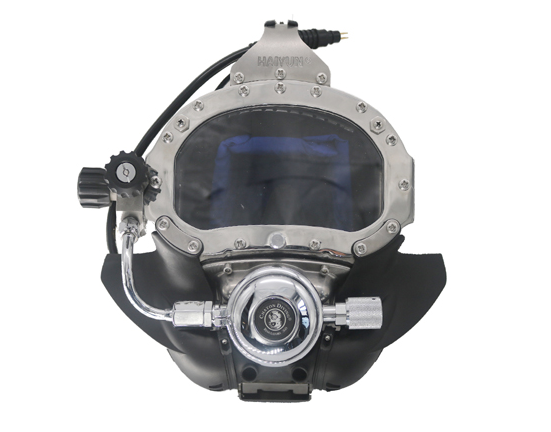
The helmet is the diver's primary protection. High-quality commercial diving helmet, such as those produced by specialized diving equipment suppliers, must feature:
Demand Regulators: To ensure smooth breathing regardless of work rate.
Side Block Assemblies: Allowing the diver to switch to a “bailout” bottle (emergency air) instantly.Non-Return Valves: A critical safety feature that prevents umbilical pressure loss from causing helmet squeeze.
The umbilical is more than just a hose. A professional-grade diver umbilical integrates the air supply hose, a pneumo-depth gauge hose, a communication cable, and often a strength member or hot water hose for deep-sea operations. Durability is key; it must be resistant to abrasion from jagged shipwrecks or underwater structures during salvage operations.
In the high-stakes environment of offshore oil construction, clear communication is a safety requirement. Modern diver communication system utilize 2-wire or 4-wire configurations with noise-canceling technology to ensure that the surface team can hear every breath and instruction from the diver.
One of the most frequent questions we receive as a diving equipment manufacturer in China is about compliance. For any international project, equipment must meet or exceed the standards set by the International Marine Contractors Association (IMCA).Key Certifications to Verify:
CE Certification: Ensuring the gear meets European health, safety, and environmental protection standards.
CCS (China Classification Society) / ABS / DNV: These classifications are vital for equipment used on vessels and offshore platforms.
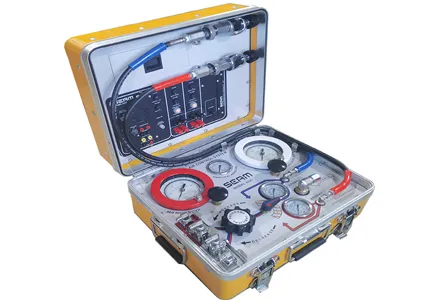
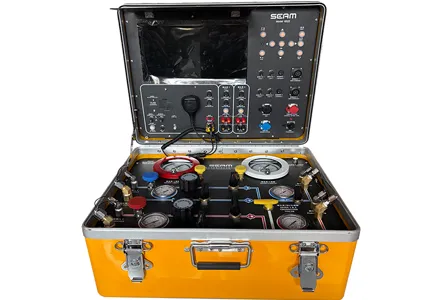
Pressure Testing: Every hyperbaric chamber and gas panel must be hydrostatically tested and certified to ensure it can handle the working pressures required for deep-sea saturation diving.
Not all diving operations are the same. A reputable diving equipment supplier should offer tailored solutions:
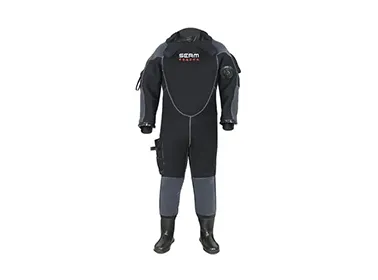
Municipal Pipe Network Diving: These teams often work in contaminated or “black water” environments. They require dry suits with specialized chemical resistance and helmets that can be easily decontaminated.
Offshore Oil & Gas: Here, the focus is on saturation diving systems and hyperbaric oxygen chambers. The equipment must be compatible with Nitrox or Heliox gas mixtures.
Naval & Marine Diving Teams: Military-grade gear focuses on low-magnetic signatures, stealth, and extreme reliability for tactical salvage or underwater mine countermeasures.
The global landscape for diving gear suppliers has shifted. Historically dominated by a few Western brands, the industry has seen a rise in high-tech manufacturing hubs in China. Brands like SEAM are now providing a strategic alternative by offering:
Direct Manufacturer Pricing: By eliminating the middleman, commercial firms can allocate more budget to safety training and project expansion.
Customization: Unlike “off-the-shelf” retailers, diving equipment manufacturers in China can often customize gas panels, umbilical lengths, communication interfaces, and umbilical diving equipment to suit specific project needs.
Rapid Logistics: For underwater emergency rescue teams, the ability to source spare parts and new systems quickly is a matter of life and death.
The relationship with your diving gear supplier should not end at the point of sale. Professional diving gear requires rigorous maintenance schedules.
Annual Overhauls: Regulators and helmets must be serviced by certified technicians.
Spare Parts Availability: Ensure your supplier maintains a robust inventory of O-rings, diaphragms, and valves.
Technical Training: SEAM provides comprehensive documentation and support to ensure that your on-site engineers can perform basic field repairs, minimizing downtime on the job site.
Selecting the right commercial diving equipment is an investment in the safety of your divers and the success of your marine projects. Whether you are managing a municipal pipe network repair or a multi-million dollar offshore oil construction project, the requirements remain the same: reliability, compliance, and technical excellence.
At SEAM, we are proud to be among the elite diving equipment companies pushing the boundaries of what is possible underwater. By combining rigorous testing with innovative manufacturing, we ensure that when your divers go down, they have the best technology in the world supporting them.