For decades, the professional diving industry was dominated by a handful of North American and European brands. However, the landscape of subsea technology has shifted. Today, some of the most advanced naval and marine diving teams, offshore oil underwater construction firms, and underwater emergency rescue units are looking to the East.
The rise of diving equipment manufacturers in China—led by engineering-centric brands like SEAM—is not merely a story of cost-efficiency. It is a story of rapid technological iteration, stringent international compliance, and a superior supply chain. For B2B buyers, understanding how to source professional diving gear from China is now a key strategic advantage.
The global perception of Chinese manufacturing has undergone a radical transformation. In the field of life-support systems, there is no room for “mass production” shortcuts. Leading commercial diving equipment manufacturers in China have invested heavily in:
CNC Precision Machining: Diving helmets and manifold blocks require tolerances measured in microns. Modern Chinese facilities utilize the same high-end multi-axis CNC machinery used in aerospace.
Advanced Material Science: From salt-water resistant stainless steel to high-impact reinforced polymers, the materials used by diving gear manufacturers in China now meet or exceed ASTM and ISO standards.
Oxygen Cleaning Protocols: For high-pressure gas panels and Nitrox/Heliox systems, cleanliness is a safety mandate. Specialized “Clean Room” facilities ensure that every valve and O-ring is free of hydrocarbons, preventing combustion risks.
For a procurement officer managing a municipal pipe network diving team or an offshore platform, “Trust” is verified through “Certification.” The leading diving equipment suppliers in China have aligned their production lines with global benchmarks:
IMCA (International Marine Contractors Association): While IMCA does not “certify” equipment, they set the guidelines. Top-tier Chinese gear is designed to be fully IMCA compliant, ensuring it can be used on any international job site.
CE & ISO Certification: These are the entry tickets to the global market. Manufacturers like SEAM maintain ISO 9001:2015 quality management systems to ensure every batch of equipment is traceable.
Class Society Approvals: For pressure vessels like hyperbaric chambers, approvals from CCS (China Classification Society), Lloyd’s Register, or DNV provide the legal and safety assurance required for naval and offshore applications.
In the world of commercial diving engineering salvage, time is the most expensive variable. A ship stuck in a harbor or a leaking subsea pipeline requires immediate action.
Western diving gear suppliers often struggle with long lead times, sometimes requiring 6–12 months for specialized systems. In contrast, the integrated industrial ecosystem in China allows for:
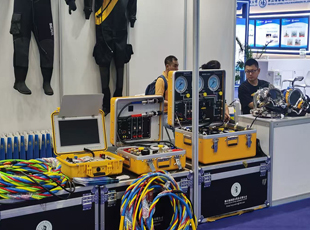
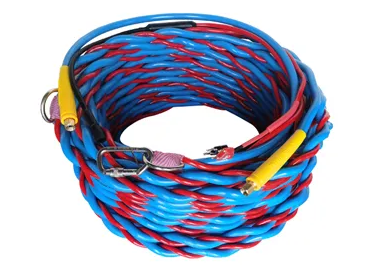
One-Stop Sourcing: A single manufacturer can provide the commercial diving helmet, the diver umbilical, the gas panel, and the decompression chamber as a unified, pre-tested system.
Rapid Prototyping: If a municipal pipe network team needs a custom-fitted camera mount or a specialized underwater tool, Chinese manufacturers can design, print, and test a prototype in a fraction of the time.
Logistical Efficiency: Proximity to major global shipping hubs ensures that spare parts for diving equipment services reach the vessel or the construction site in days, not weeks.
Every CFO in the marine engineering sector faces the same challenge: how to lower CAPEX (Capital Expenditure) while maintaining a perfect safety record.
By sourcing from reputable diving equipment china manufacturers, firms can often reduce their initial equipment investment by 30% to 50% compared to legacy Western brands. This “Efficiency Dividend” allows companies to:
Modernize Gear More Frequently: Instead of using 15-year-old helmets, teams can afford to cycle in the latest tech every few years.
Invest in Redundancy: Companies can afford to keep “Back-up” systems on-site, a critical factor in underwater emergency rescue where equipment failure is not an option.
To ensure you are partnering with high-tier diving equipment companies like SEAM, use the following checklist:
Technical Documentation: Does the supplier provide detailed pressure test reports and material mill certificates?
After-Sales Infrastructure: Do they offer comprehensive diving equipment services, including technician training and specialized toolkits for field repairs?Real-World Track Record: Can they demonstrate that their gear is currently in use by naval and marine diving teams or major offshore contractors?
The “China Advantage” in diving equipment is no longer just about the price—it is about the integration of value and performance. As subsea projects become more complex, the need for agile, compliant, and high-tech diving gear manufacturers becomes paramount.
At SEAM, we represent the pinnacle of this new era. We invite global engineering firms, salvage specialists, and naval procurement officers to look past the labels and look at the engineering. When you choose SEAM, you are choosing a partner dedicated to the safety of your divers and the success of your mission.